7 Reasons Why Distributors Should Choose the Best Mutual Fund Software in India

Choosing the best mutual fund software in India has become one of the most important decisions a Mutual Fund Distributor can make today — not because software is “trending”, but because the nature of the MFD business itself has fundamentally changed.
Earlier, distribution was driven largely by relationships, paper forms, and manual follow-ups. Today, an MFD is expected to act as an advisor, operations manager, compliance handler, data reviewer, and service partner — all at the same time. Managing all of this manually is no longer practical.
This is why more distributors across India are moving towards full-featured MF software. Let’s clearly understand why this shift is happening and how it supports real, day-to-day business growth.
Why Choose MF Software Today
1. Excel Cannot Support a Growing MFD Business Anymore
Almost every distributor starts with Excel. It works when the business is small.
But problems begin once:
● client count increases
● SIP volumes grow
● reporting requirements expand
● compliance tracking becomes stricter
● investors expect faster responses
Excel files then become:
● scattered across folders
● outdated the moment data changes
● dependent on manual updates
● prone to human error
● difficult to audit or track historically
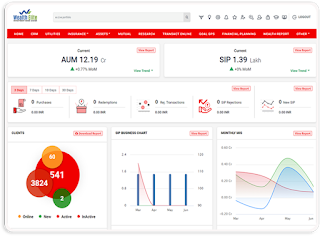
Well, mutual fund software in India, like REDVision Technologies, replaces this chaos with live, system-driven data. AUM, SIPs, transactions, reports, capital gains, and brokerage update automatically.
Instead of managing data manually, the system manages it for you — which is often the first major relief distributors experience after switching.
2. Digital Transactions via NSE, BSE, and MFU Are Now a Basic Expectation
Investor expectations have evolved. They no longer want:
● physical forms
● repeated signatures
● delayed confirmations
● long turnaround times
They expect fast, digital execution. With the best mutual fund software for IFA in India
software, MFDs can place transactions online through:
● NSE
● BSE
● MFU
This includes:
● purchases
● redemptions
● SIPs
● STPs
● SWPs
● switches
For distributors, this means:
● faster execution
● fewer operational delays
● less manual dependency
● smoother servicing
For investors, it means convenience and confidence — and this directly improves how professional your practice appears.
3. Investors Expect Multiple Products From One Advisor
Investors don’t think in product silos. They think in terms of:
● goals
● risk
● returns
● liquidity
● diversification
A single investor may need:
● mutual funds for long-term wealth
● fixed deposits for stability
● bonds for predictable income
● equities for growth
● IPOs for opportunities
The leading software allows MFDs to offer and track multiple asset classes from one platform, such as:
● Mutual Funds
● IPOs
● Equity
● Fixed Deposits
● Bonds
● P2P investments
This helps you stay relevant across different life stages and reduces the risk of clients going elsewhere for additional products.
4. Team and Sub-Broker Management Becomes Complex Without Software
As an MFD grows, the business is no longer just about clients — it’s also about people.
This may include:
● sub-brokers
● relationship managers
● operations staff
● branch teams
Without a structured system, managing:
● access rights
● responsibilities
● data visibility
● performance
● payouts
quickly becomes chaotic. The software introduces structure by allowing you to:
● define clear hierarchies
● control who can view or edit data
● restrict sensitive information
● track performance across teams
Many distributors realise later that software isn’t only for client management — it’s essential for internal control and scalability.
5. Income Visibility Is Critical for Running Distribution as a Business
Many distributors know they are earning, but struggle to clearly answer:
● how much brokerage they earned this month
● how much was paid out to sub-brokers
● what the actual net income is
● which clients or products contribute most
Manual reconciliation often leads to:
● delays
● inaccuracies
● assumptions instead of facts
Brokerage analytics dashboards inside the software provide clarity by showing:
● total brokerage earned
● total payouts
● net brokerage retained
● trends over time
Once income becomes visible, planning becomes possible — and distribution starts operating like a structured business, not guesswork.
6. Quality Investment Support Requires Strong Research Support
Advisory today is not judged only by returns. Investors want to understand:
● why a scheme was selected
● how it compares to alternatives
● how consistent its performance has been
● how it aligns with their goals
Wealth management software includes research tools such as:
● SIP calculators
● scheme comparison tools
● rolling return analysis
● performance and consistency metrics
These tools help MFDs explain decisions clearly and confidently — without depending on multiple external platforms.
7. Professional Reporting Builds Long-Term Investor Trust
Transparency is now a basic expectation. Investors want:
● clear portfolio visibility
● regular updates
● easy-to-understand reports
● quick access to data when needed
Good software allows distributors to generate and share 30+ professional reports, including:
● portfolio reports
● capital gain statements
● tax packages
● AUM summaries
● performance and allocation reports
Consistent, professional reporting strengthens trust — and trust is what drives long-term retention.
Why All of This Matters Today
Being an MFD today is no longer about “managing somehow”.
It’s about:
● efficiency
● accuracy
● speed
● compliance
● scalability
● professionalism
The right software reduces:
● manual effort
● operational dependency
● errors
● stress
And increases:
● control
● visibility
● service quality
● growth potential
Excel helps you start. Software helps you scale.
Final Thoughts
Distributors choose the best software not for convenience, but for sustainability. When transactions, products, teams, income tracking, research, and reporting come together on one platform, the business becomes structured, scalable, and future-ready.
In today’s competitive environment, working smarter is no longer optional — it’s essential.
FAQs
1. What is mutual fund software for distributors?
Mutual fund software is a digital platform that helps distributors manage client portfolios, execute online transactions, track brokerage income, handle compliance, access research tools, and share reports from one system.
2. Is mutual fund software useful only for large MFDs?
No. Mutual fund software is equally useful for solo distributors and small firms, as it reduces manual work, improves accuracy, and helps manage growth without adding extra staff.
3. Can mutual fund software completely replace Excel for MFDs?
Yes. Mutual fund software automates data updates, calculations, reporting, and tracking, eliminating the need for manual Excel-based management.
4. Does using mutual fund software improve investor experience?
Yes. Faster transactions, clear reporting, digital access, and timely updates significantly improve investor convenience, transparency, and trust.


Comments
Post a Comment